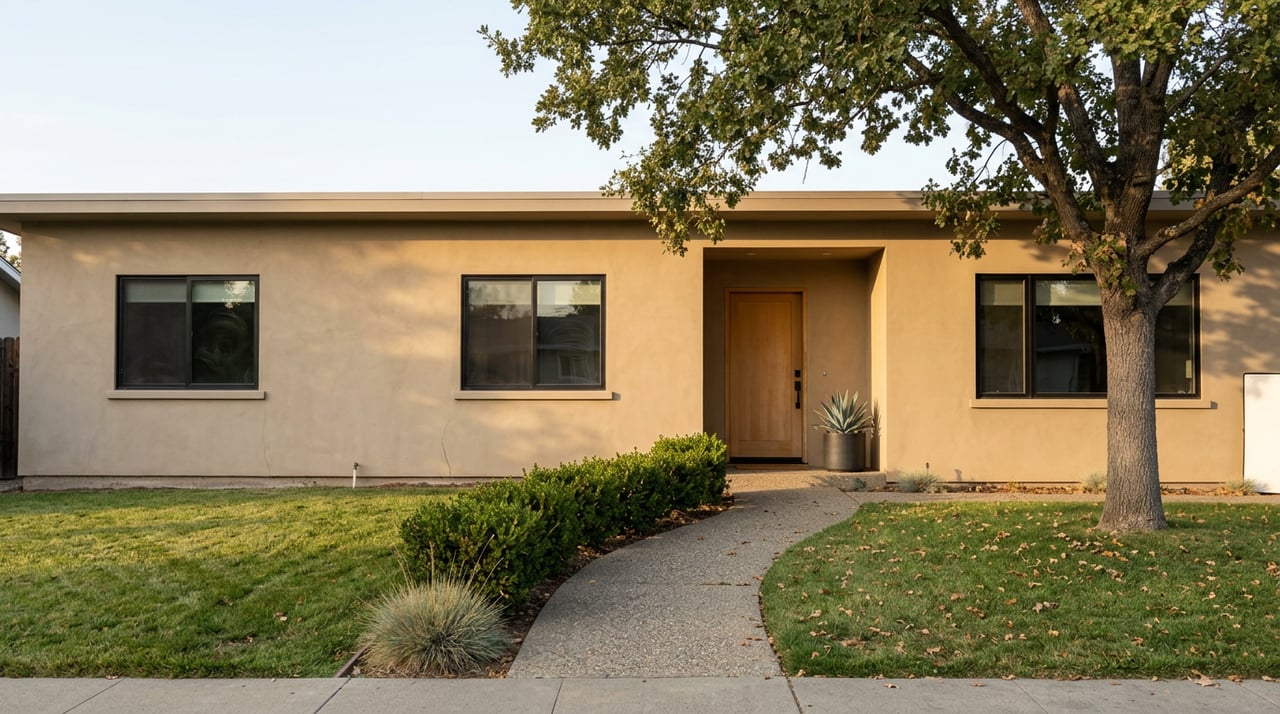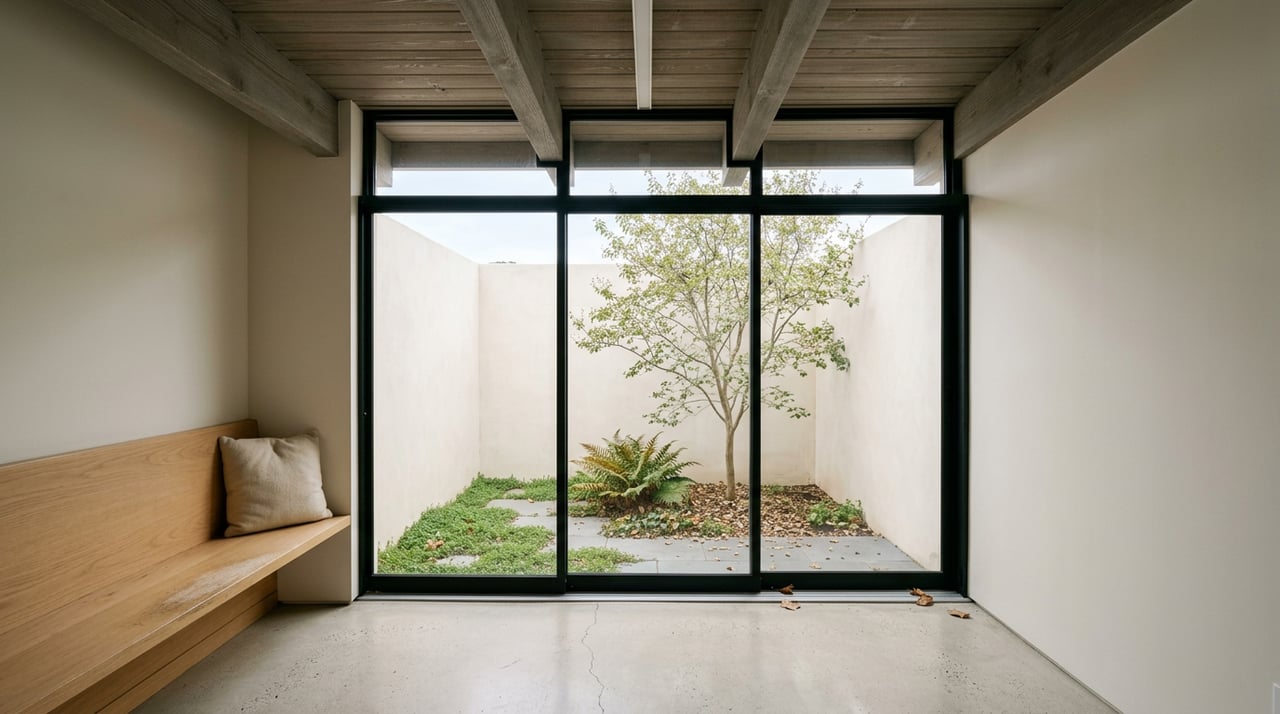
Say the word "Eichler" to most Bay Area buyers and they picture the same thing: a low, glass-walled ranch house sitting alone on its own lot in Palo Alto or San Rafael, radiant heat humming under a private atrium, no neighbor closer than a driveway away. That picture is accurate for roughly 11,000 of the homes Joseph Eichler built across Northern California. It is not accurate for the hundred he built in San Francisco's Diamond Heights, and the gap between the two matters most at the exact moment a seller sits down to complete a disclosure statement.
Diamond Heights Eichlers share walls. They step down a hillside in split levels and, in some cases, three stories. The advice built for a standalone slab home in the Peninsula suburbs does not fully cover what a seller here needs to think through, because the thing that fails, leaks, or settles in one of these homes is not always contained to that home alone.
One Tract, Four Streets, A Different Set of Problems
Eichler's crew built roughly 100 homes on Amethyst Way, Amber Drive, Cameo Way, and Duncan Street between 1962 and 1964, working under a San Francisco Redevelopment Agency mandate to turn a rocky outpost above Glen Park, then known by its constituent hills, Red Rock, Gold Mine, and Fairmount, into a modern residential district. The agency limited the whole neighborhood to a single thoroughfare, Diamond Heights Boulevard, to keep the area's rural feel intact even as it filled in.
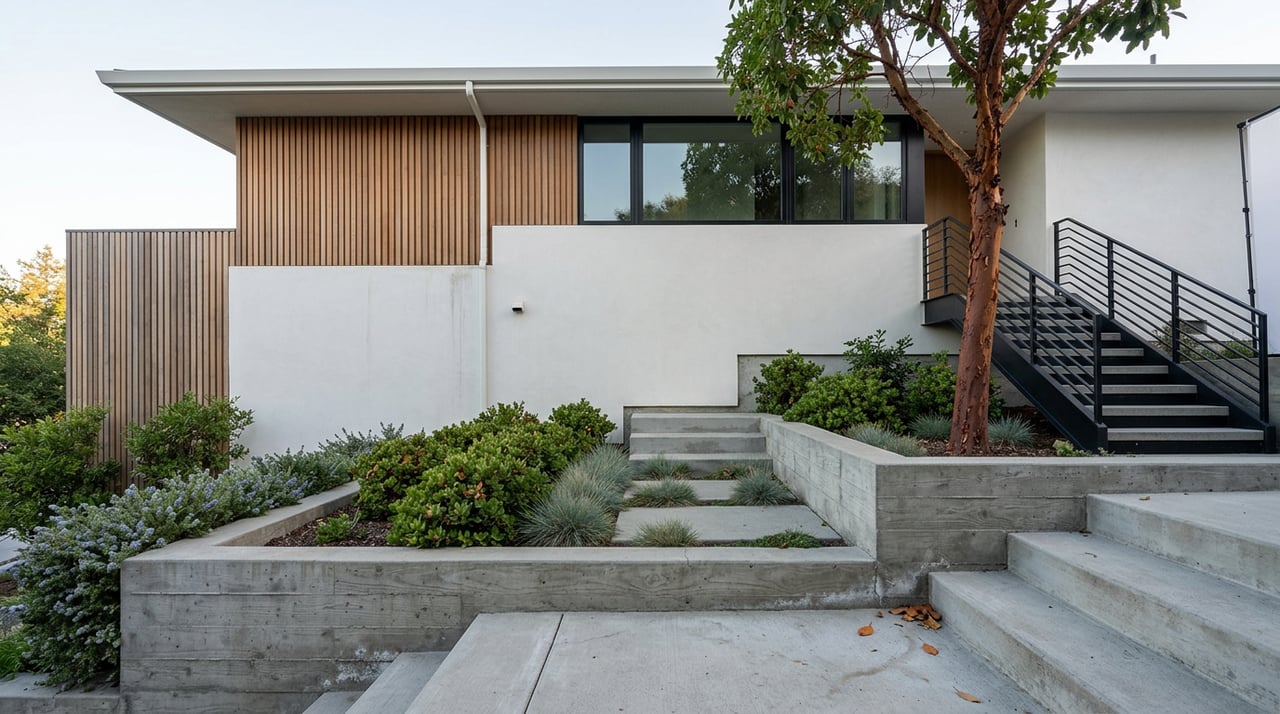
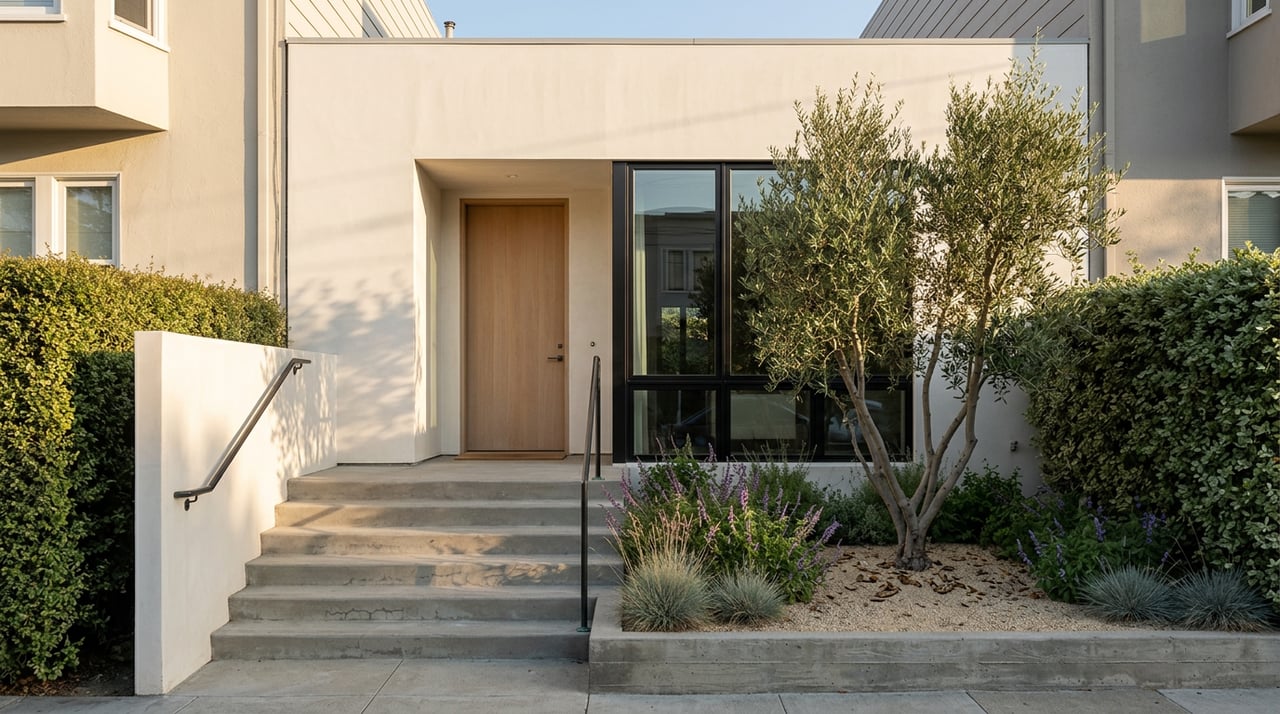
Architect Claude Oakland, who had already worked with Eichler on dozens of single-story tracts, had to solve a problem he had not faced elsewhere: steep, uneven lots that could not accommodate the typical Eichler footprint. His answer was a set of seven floor plans that broke from the formula in a specific way. Instead of freestanding one-story homes wrapped around a private atrium, Diamond Heights got attached row houses with split-level and multi-story layouts, some with street-facing courtyards standing in for the atrium, some accessed by central staircases that step the living space down the slope. It is one of the more unusual bodies of work Eichler's company produced, and the attachment between units is the detail that changes everything downstream.
What Attached Actually Changes At Disclosure Time
California's Real Estate Transfer Disclosure Statement asks sellers a direct question that a standalone Eichler seller in Palo Alto rarely has to think hard about: whether the property shares features such as walls or driveways with an adjoining property. In Diamond Heights, that question is not a formality. A party wall between two Eichler units is a shared structural element, and a defect that shows up on your side, whether it is a hairline crack, water intrusion, or settling tied to the hillside grade, can implicate the unit next door in ways a detached ranch house never would.
This does not mean every Diamond Heights sale requires an attorney. It means the seller and the listing agent need to know which structural elements are genuinely private to the unit and which are shared before the transfer disclosure statement gets filled out, not after a buyer's inspector raises the question during the contingency period. California's disclosure code requires this information to be delivered as soon as practicable before transfer, and once a buyer receives a complete statement they gain a three-day cancellation window if delivered in person, five if by mail. A seller who has to amend a disclosure mid-escrow because a shared-wall question surfaces late is handing the buyer a fresh clock, not just an awkward conversation.
The Slab Nobody Can See Into
Every Eichler, attached or not, shares one mechanical fact: the radiant heat runs through copper or steel tubing embedded directly in the concrete slab. The tubing was innovative when Eichler installed it and it is now, in the newest Diamond Heights examples, more than 60 years old.
The trouble with a radiant leak is that it rarely announces itself. The system is a closed loop designed to top itself off automatically, so a slab leak can run for months with nothing more visible than a slightly higher water bill, because the water it loses goes straight down into the ground rather than up through the floor. Finding the leak usually means a technician pressurizes the system, sometimes with helium, and walks the house with a detector sensitive enough to locate it through tile and pergo alike. A basic radiant inspection and pressure test runs $150 to $300 depending on the technician's drive time, and it is the single most useful pre-listing expense a Diamond Heights Eichler seller can make, because California's transfer disclosure statement asks about heating defects including past defects that have already been repaired. A seller who fixed a radiant leak five years ago still has to disclose that it happened.
Steel tubing is the harder case. Once corrosion starts in a steel system, repair options narrow fast, and replacement, whether with new radiant lines, baseboard, or forced air routed through whatever attic space the split-level design allows, becomes the practical answer. Copper systems, by contrast, tend to hold up for decades with periodic maintenance. Knowing which one is under your floor before a buyer's inspector finds out is the difference between a clean disclosure and a renegotiated price two weeks before closing.
A few other original components tend to reach the end of their working life on a similar timeline:
| Original component | What tends to fail first |
|---|---|
| Steel radiant tubing | Corrosion, leaks that show no surface signs |
| Flat or low-slope tar-and-gravel roofing | Ponding water, membrane cracking |
| Galvanized supply plumbing | Internal corrosion after 60-plus years, reduced flow |
| Original sewer laterals | Root intrusion, aging clay pipe |
A sewer scope during escrow prep answers the plumbing and sewer questions before they become a renegotiation point, the same way a pressure test answers the radiant question.
The Renovation Wave Changes What Buyers Ask
Diamond Heights is in the middle of a visible remodel cycle. Architecture firms have been taking on Eichler updates in the neighborhood in back-to-back projects, and one recent example, a 1962 Eichler updated by Michael Hennessey Architecture, added a fourth floor along with a connecting bridge and shed structure to give a growing family more room, a project that made architecture press earlier this year. That kind of visible investment raises buyer expectations across the tract, and it raises a specific disclosure question for anyone who has done similar work: California's AB 968 expanded disclosure obligations for sellers who performed their own renovations, which means an owner-added floor, a converted garage, or a reworked stair needs permit documentation ready before the home hits the market, not assembled after a buyer's agent asks for it.
The local architectural historian community has a name for the risk on the other side of that coin. Hannah Simonson, who leads walking tours of the tract for the Glen Park Neighborhoods History Project, has used the term "Dwellification" to describe the danger of remodeling an Eichler so thoroughly that the qualities buyers actually seek out, the post-and-beam structure, the floor-to-ceiling glass, the shoji-style closet doors, disappear along with the outdated systems. A seller weighing how far to take a pre-listing update is really choosing between two different buyer pools: one paying for a fully modernized system with clean permits, and one paying specifically for an Eichler that still reads as one.
Before You List: Four Things To Do Early
- Pressure-test the radiant system and get the result in writing, whether the tubing is copper or steel
- Schedule a sewer scope to document the condition of the original lateral
- Pull permit records for any addition, garage conversion, or structural change made during your ownership
- Confirm in writing which walls, foundations, or drainage elements are shared with the adjoining unit
None of these require a specialist beyond the trades already familiar with the tract. The Glen Park Neighborhoods History Project keeps its "Modern Diamond Heights" tour active, and historian Richard Brandi has presented on the neighborhood's redevelopment history at the group's general meetings, which tells you something useful on its own: this is a small enough collection of homes that its systems, its history, and its known issues are well documented by people who are not trying to sell you anything. That is worth reading before your own disclosure conversation, not after.
FAQ
Does a Diamond Heights Eichler need an inspection beyond the standard general inspection? A radiant heat pressure test and a sewer scope are not part of a standard general home inspection and need to be scheduled separately. Given the age of the original systems, both are worth doing before a listing goes live rather than waiting for a buyer's inspector to request them during the contingency period.
Are these homes protected by any historic designation that limits what I can change? The homes are not individually landmarked, though they are documented as part of San Francisco's mid-century redevelopment history. Any structural change, whether historically sensitive or not, still needs to go through the city's standard permitting process, and that permit history is what a buyer's disclosure review will ask about.
What if I never had the radiant system serviced during my ownership? Disclose what you know rather than guessing. California's disclosure law asks for actual knowledge, not a forensic investigation, but a pressure test before listing turns an unknown into a known fact you can put in writing, which tends to serve sellers better than silence.
If you're weighing how much to update before you list, or you want a clear read on what a radiant test or sewer scope might turn up before a buyer's inspector does, James Rowbotham has walked Diamond Heights sellers through exactly this kind of preparation, including how Compass Concierge can cover the cost of pre-listing work upfront. Let's connect before your disclosure conversation starts, not after.