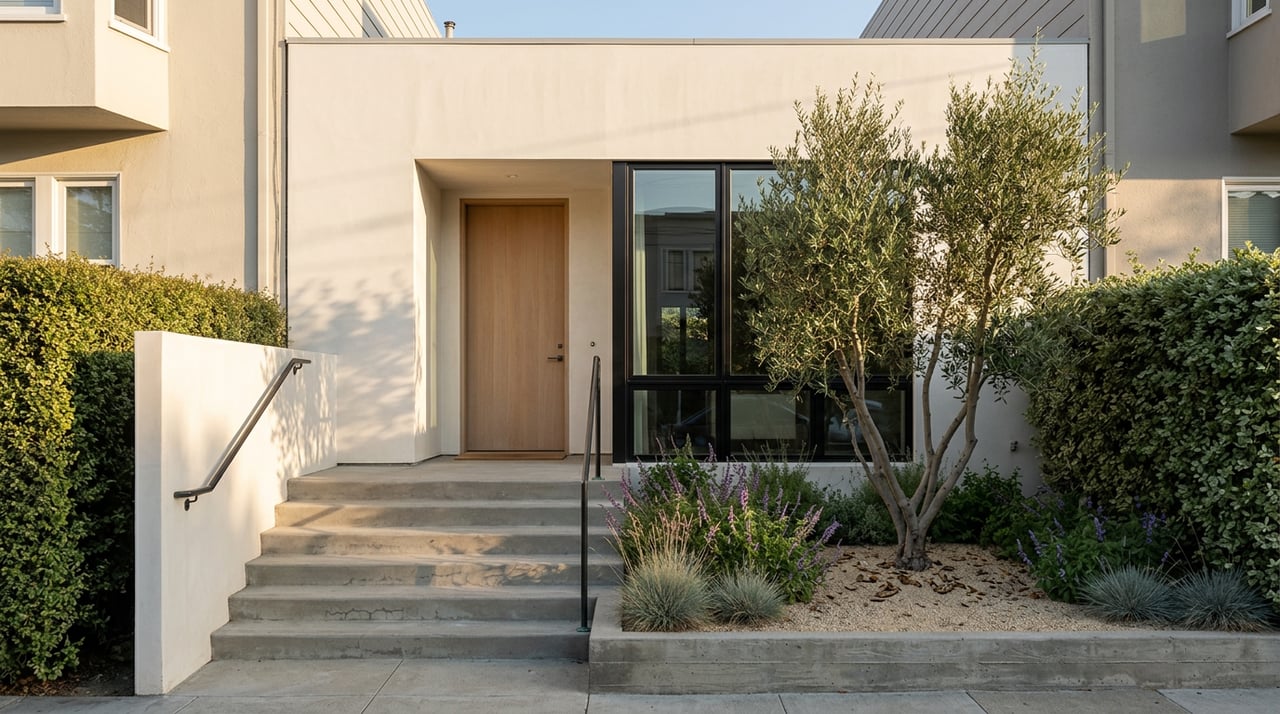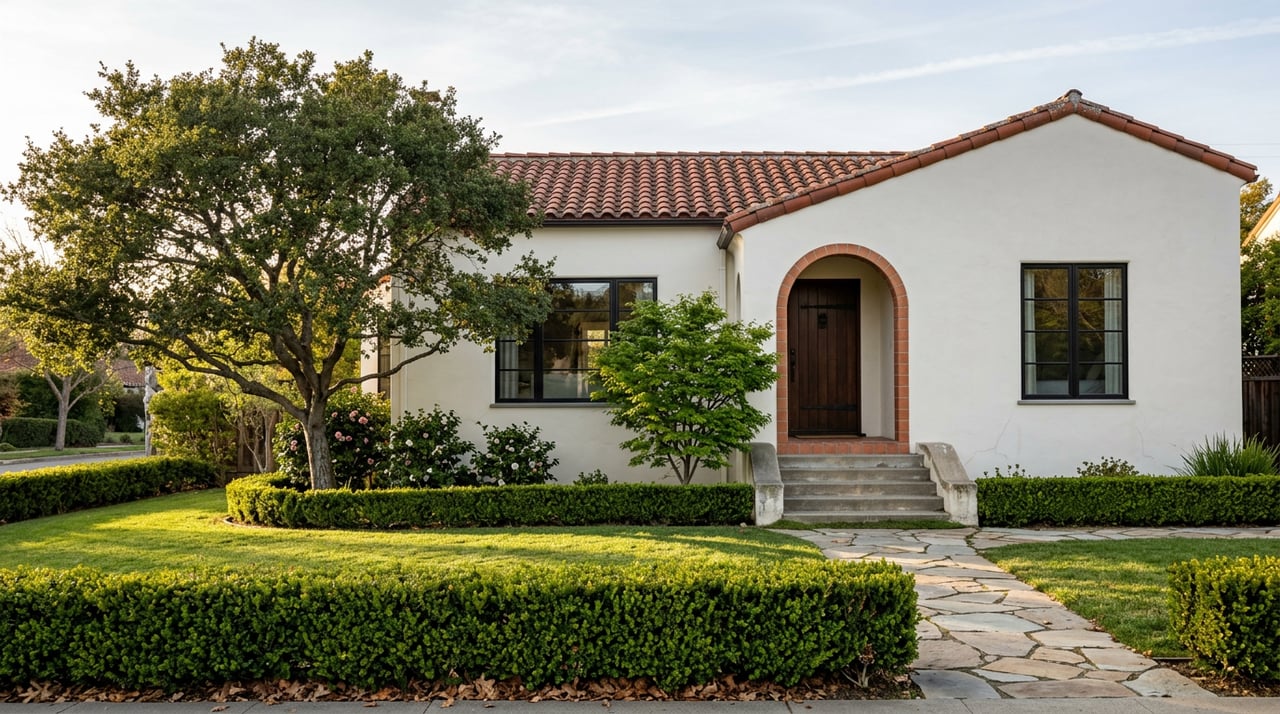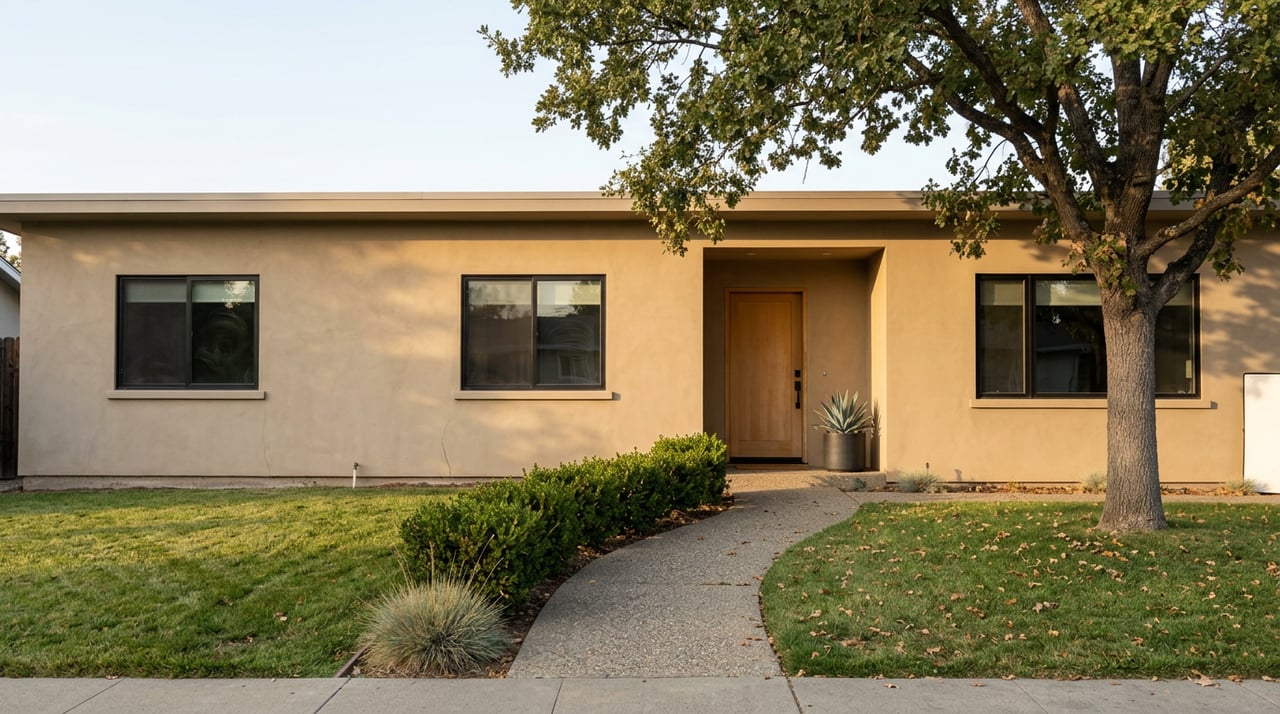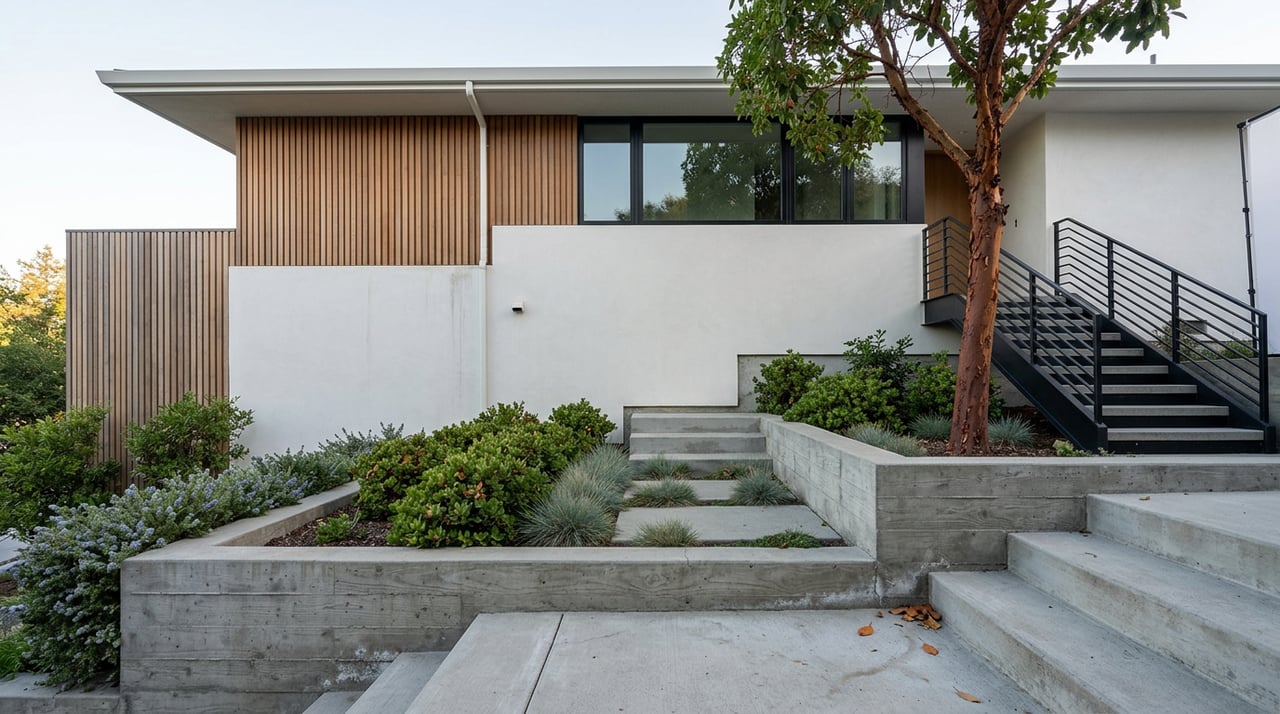
Leave a house near 160 Amber with a dog on a leash and most of your neighbors will assume you're headed to the car. Diamond Heights has a reputation as a place you drive out of, not a place you walk from. But turn onto the unmarked walkway right next to that address, and within two blocks you're descending stairs that most residents have never noticed exist, on your way into Glen Canyon Park.
That's the thing about this neighborhood that doesn't show up in the usual description of quiet streets and mid-century houses on stilts. Diamond Heights was built with a stairway network stitched directly into the hillside, connecting the three hills it sits on to the canyon below and the shopping center at its center. For decades, most of those stairways had no signs. You could live here for years and never know Coralino Lane or Opalo Lane existed, because nothing on the ground told you they did.
A Walk With Names Nobody Could Read
The Glen Park Association mapped the full loop in 2021: a roughly three-mile figure-eight that starts around 540 feet of elevation, drops into the canyon, climbs back out near the shopping center, and tops out around 660 feet. It's not a punishing climb, but the stairways make it feel like more of a hike than a walk, in the good way.
What makes the route worth knowing isn't just the elevation change. It's that the stairways connecting the neighborhood to the canyon had names the whole time, and almost no way to read them. Some were named after semiprecious stones, following the pattern of streets like Turquoise and Amber. Others got women's names in an old San Francisco tradition. Patrick Carroll of the Diamond Heights Community Association pushed to get several of them signposted, working with Supervisor Rafael Mandelman's office and SFMTA. Signs eventually went up on Colleen Lane, Onique Lane, Coralino Lane, and Opalo Lane, the last one tucked to the right of the Bank of America inside the shopping center, easy to walk past without noticing it climbs anywhere at all.
Carroll's point, and it's a fair one, is that a person could pass right by an unmarked stairway and never register it as a through-route. That's been true of this neighborhood's relationship to Glen Canyon for a long time. The canyon is a five-minute walk from most Diamond Heights addresses, but the connection has never been obvious unless someone showed you where to look.
What You're Actually Walking Into
The canyon itself does a lot of the work once you're in it. Glen Canyon Park runs about 70 acres between Diamond Heights, Glen Park, and Miraloma Park, and it carries Islais Creek, which is the largest creek in San Francisco that still runs free and has public access to it. Most of the city's original creeks were channeled underground a century ago. This one wasn't, and you can hear it along the lower trails.
The Coyote Crags Trail is the connector most people on the Diamond Heights side use to reach Christopher Playground, and it earns its name. The canyon supports resident red-tailed hawks and great horned owls year-round, and its rock outcrops and grassland have hosted rarer visitors too, including species birders don't expect to find inside city limits. Coyotes den here as well, and they've been part of this landscape long enough that Golden Gate Bird Alliance's own trail notes advise keeping small dogs close after dark, since resident coyotes are protective of denning areas at dusk.
That's not a reason to avoid the canyon. It's a reason to walk it the way people who actually live here do: dog on a short leash, especially in the evening, eyes up for hawks circling the ridgeline rather than down at a phone. The California Academy of Sciences has tracked a harder edge to this coexistence too. Vehicle strikes are the leading cause of death for coyotes in San Francisco, and one juvenile coyote was killed on Portola Drive, just above the canyon, in 2023. If you drive Portola or O'Shaughnessy at dusk, that's worth knowing regardless of how you feel about the animals.
The Canyon You're Walking Was Rebuilt Recently, Not Long Ago
Part of what a canyon walk shows you today is the result of a habitat rebuild that played out over 2024 and into 2025. The San Francisco Public Utilities Commission removed aging eucalyptus and Monterey pine along the O'Shaughnessy side of the canyon, behind the houses on the Bosworth spur, working to finish before the 2025 bird-nesting season. Many of those eucalyptus trees were planted more than a century ago by Adolph Sutro and had simply outlived their safe lifespan. In their place, the agency said it was growing native coast live oak and willow saplings at its Sunol nursery for planting in the cleared ground. SFPUC's Damon Spigelman put the intent plainly to neighbors worried about the work:
"We're not selling the land, we're not building infrastructure here. We're turning it back to a native habitat."
It's a smaller version of a fight the neighborhood has had before. A 2012 push to remove around 60 eucalyptus trees during the Glen Park Recreation Center renovation drew a permit appeal from a Miraloma Park resident and delayed a $5.8 million project by three months. The 2024 work was more contained, focused on under four acres, but it's the same underlying tension between the eucalyptus canopy people grew up under and the native plant communities the Recreation and Parks Department's restoration plan is trying to bring back. If you want to see how that ground has filled in since, or help it along, Friends of Glen Canyon has organized a volunteer habitat restoration morning every third Saturday, a standing rhythm in the neighborhood calendar that outlasts any single construction phase.
Where the Loop Comes Out
The stairway route eventually spits you out at the Diamond Heights Shopping Center, which is doing more work for this neighborhood than its strip-mall footprint suggests. It's the only shopping within walking distance for most Diamond Heights addresses, and it covers the actual errands people run: a Safeway, a Walgreens, a Starbucks, a Great Clips, a USPS branch, and Seven Hills Veterinary Hospital if the dog that just did three miles of stairs needs a nail trim. There's also a ramen counter called Choice Yankiku and a Chinese restaurant for the walk home, which is the kind of detail that turns a hike into an actual Saturday rather than a workout you have to plan meals around.
Christopher Playground sits between the shopping center and the canyon rim, and it's worth the short detour even without kids in tow. The playground reopened in the spring of 2021 after a $5.2 million renovation, and the project preserved two original 1971 sculptures, Saddle Slide by Jim Miller-Melberg and Pleasure Dome by David Aaron, alongside a new replica piece called Playwall. Five years on, it's still a small, strange, genuinely good detail: a mid-century modernist sculpture garden built right into a children's playground, holding its ground while the trails around it get restored one native tree at a time.
The Loop, If You Want the Numbers
| Distance | About 3 miles round trip |
| Elevation | Starts near 540 ft, tops out near 660 ft |
| Time | Roughly 2 hours with stops |
| Key waypoints | Bosworth trailhead, Coyote Crags Trail, Christopher Playground, Diamond Heights Shopping Center |
| Best avoided at | Dusk, if you're walking a small dog off leash |
None of this requires a car, which is the part of Diamond Heights that its reputation as an isolated, drive-everywhere hilltop tends to miss. The stairways were always there. They just needed someone to put a name on them where you could see it.
If you're curious how this kind of neighborhood texture, the trails, the shopping center rhythms, the small civic fights over trees, actually shapes what a home in Diamond Heights is worth to the people who live in it, James Rowbotham has spent two decades learning this hillside from the inside. Let's Connect whenever you're ready to talk about it.