San Francisco isn’t moving in one direction when it comes to housing, it’s moving in two.
On one end, the city is pushing aggressively toward higher-density development in an effort to address a long-standing housing shortage. On the other, ultra-luxury, design-driven homes continue to move forward in the most iconic neighborhoods, reinforcing the city’s position at the top of the global real estate market.
Two current projects, one in Twin Peaks and one in Russian Hill, capture this divide in real time.
At 1230–1240 Twin Peaks, a development site positioned for approximately 80 residential units reflects a clear shift in policy. Under Daniel Lurie, zoning changes in areas like Twin Peaks are opening the door to higher-density housing, with fewer traditional constraints. Notably, projects of this scale are no longer tied to parking requirements, removing a major cost burden and allowing developers to maximize unit count.
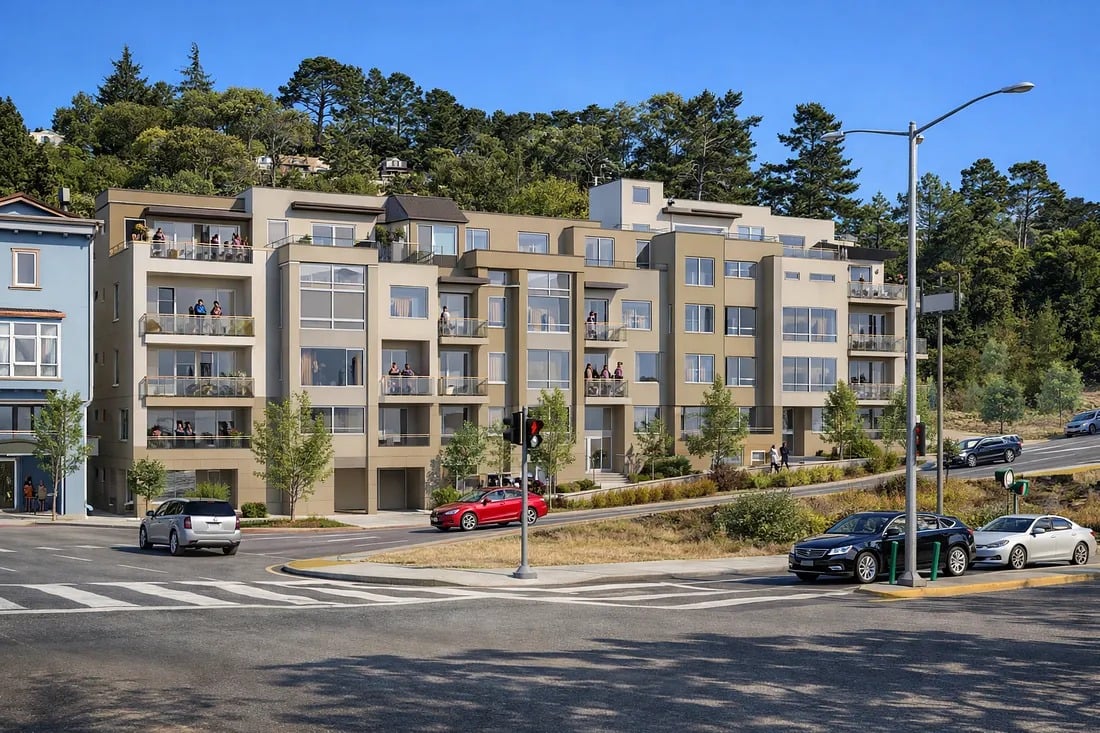
But what’s accelerating this shift even further is the increasing use of California Senate Bill 35 (SB 35).
In conversations with a local architect actively working on multifamily projects, SB 35 is no longer theoretical; it’s a tool being implemented in real time. When a project qualifies, SB 35 allows developers to bypass much of the discretionary approval process and move forward through a ministerial, “by-right” pathway. That means no prolonged hearings, reduced exposure to appeals, and significantly faster timelines.
From a design and planning standpoint, this changes everything.
Architects are now approaching projects with a different mindset, prioritizing strict adherence to objective zoning standards from day one, knowing that if they “design to the code,” they can unlock a much faster approval path. In markets like San Francisco, where time delays can kill feasibility, SB 35 is becoming one of the most powerful tools to actually get housing built.
This is not a subtle change. It represents a fundamental pivot in how San Francisco is approaching its housing crisis. By prioritizing density and reducing barriers to construction, the city, and the state are signaling that increasing supply is no longer optional; it’s necessary.
At the same time, a very different kind of development continues just a few miles away.
At 45 Montclair Terrace, located just off the world-famous curves of Lombard Street in Russian Hill, a fully entitled project offers the opportunity to build a roughly 10,000-square-foot residence with sweeping views from Alcatraz Island across the Bay to the downtown skyline. The property, currently in shell condition, has approvals in place for a landmark-level build in one of San Francisco’s most recognizable locations.
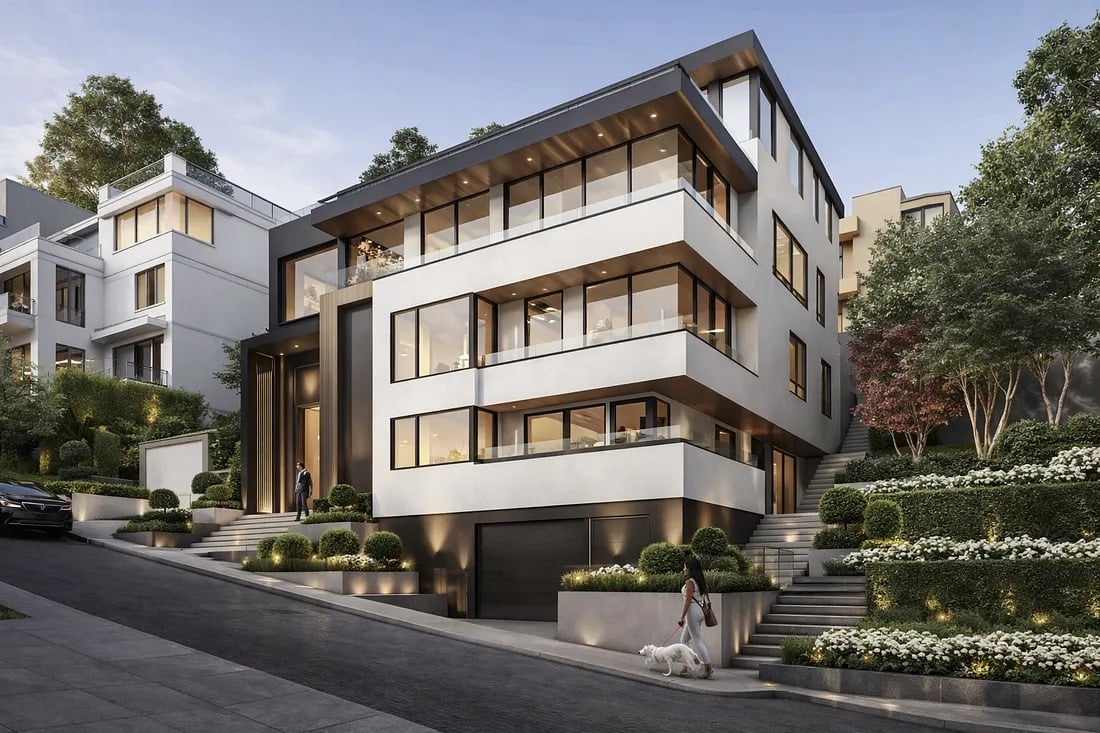
But what’s particularly telling is not just the scale of the home, it’s how it was approved.
The project includes an accessory dwelling unit (ADU), a feature that has become increasingly important in navigating San Francisco’s planning process. As the city pushes to preserve and expand housing supply, ADUs are strongly encouraged and, once approved, are generally expected to remain in place. In practical terms, that means these units are not easily removed or reduced, reinforcing the city’s broader objective of maintaining overall housing inventory even within ultra-luxury development.
In many cases today, the ADU is no longer optional, it’s expected.
That detail matters. It shows that even at the highest end of the market, projects are being shaped by the same underlying pressure: add housing, not subtract it.
Taken together, these two projects tell a larger story about where San Francisco is headed.
This is no longer a market defined by a single strategy. It’s a dual-track system one where large-scale, high-density projects often accelerated by tools like SB 35 aim to address affordability and supply, while at the same time, rare, high-end developments continue to push architectural and pricing boundaries.
For developers, investors, and policymakers, the takeaway is clear: the future of San Francisco housing will be built across both ends of the spectrum.
And increasingly, success will depend on understanding how those two worlds intersect.